Introduction
A sprained ankle can happen in a split second — stepping off a curb, landing awkwardly, or twisting your foot during daily activity. The pain, swelling, and stiffness that follow can make even simple movements uncomfortable. Many people search for how to heal a sprained ankle overnight because they want fast relief and the ability to move with less pain by morning.
While a sprain cannot be fully healed in one night, the right actions can dramatically reduce inflammation, control pain, and support early tissue repair. This article explains what actually works overnight, what to avoid, and how to set your ankle up for faster recovery.
Understanding a Sprained Ankle
An ankle sprain occurs when the ligaments that stabilize the ankle stretch or tear. Ligaments are strong bands of tissue that connect bones and prevent excessive joint movement. When these ligaments are injured, swelling and pain develop quickly.
Common Causes of Ankle Sprains
- Sudden twisting or rolling of the ankle
- Uneven surfaces or poor footing
- Sports or exercise injuries
- Weak ankle stability or previous sprains
Types of Ankle Sprains
| Grade | Severity | Ligament Damage | Symptoms |
|---|---|---|---|
| Grade I | Mild | Stretched | Mild pain, little swelling |
| Grade II | Moderate | Partial tear | Swelling, bruising, pain |
| Grade III | Severe | Full tear | Severe pain, instability |
Knowing the severity helps set realistic expectations. Mild and moderate sprains respond best to overnight care strategies.
How to Heal a Sprained Ankle Overnight
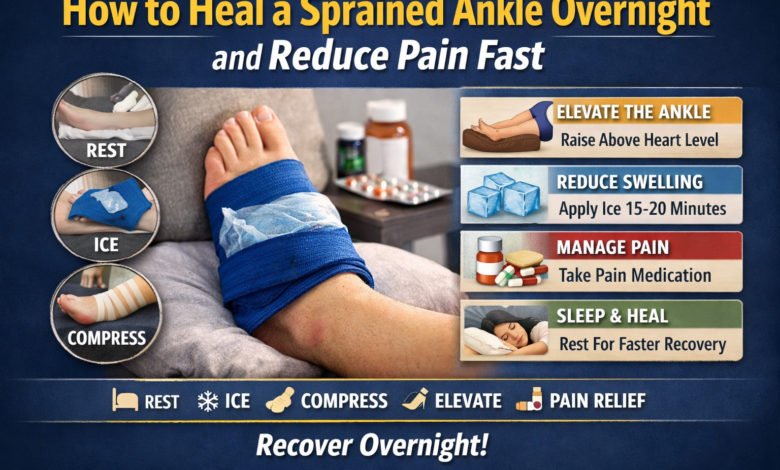
Overnight ankle care focuses on reducing swelling, protecting ligaments, improving circulation, and controlling pain to promote faster recovery.
When people ask how to heal a sprained ankle overnight, what they really want is less pain, less swelling, and better movement by morning. The goal overnight is damage control — not complete healing.
Step 1: Rest the Ankle Completely
Rest is the foundation of ligament recovery. Continuing to walk or stand unnecessarily places stress on injured tissue.
- Avoid weight-bearing if possible
- Use pillows or supports to keep the ankle stable
- Do not stretch aggressively at night
Step 2: Apply Ice the Right Way
Ice helps reduce inflammation and numbs pain receptors.
| Ice Therapy Guidelines | Details |
|---|---|
| Duration | 15–20 minutes |
| Frequency | Every 2–3 hours |
| Protection | Wrap ice in cloth |
| Best Time | Before sleep |
Never apply ice directly to the skin. Proper icing is one of the most effective methods for how to heal a sprained ankle overnight safely.
Step 3: Use Compression for Swelling Control
Compression prevents fluid buildup in injured tissue.
- Elastic bandages should feel snug, not tight
- Start wrapping from toes upward
- Remove if numbness or tingling occurs
Compression works best when combined with elevation.
Step 4: Elevate the Ankle While Sleeping
Elevation allows gravity to assist fluid drainage.
Best elevation tips:
- Keep ankle above heart level
- Use 2–3 pillows for support
- Maintain elevation for several hours
This step significantly improves overnight comfort.
Step 5: Pain Management Before Bed
Pain relief improves sleep quality, which directly affects healing.
Options include:
- Cold therapy
- Gentle compression
- Over-the-counter pain relievers (as directed)
- Relaxation techniques to reduce muscle tension
Overnight Do’s and Don’ts
Avoid heat, massage, and walking on a fresh sprain overnight. Focus on rest, ice, compression, and elevation for relief.
What to Do
- Keep the ankle supported
- Apply ice before sleeping
- Elevate consistently
What to Avoid
- Heat therapy
- Alcohol
- Stretching aggressively
- Sleeping without support
Mistakes made overnight can increase swelling and delay recovery.
How Long Does Overnight Recovery Take?
While you cannot fully repair ligaments in one night, noticeable improvements often occur.
| Timeframe | Expected Improvement |
|---|---|
| 8–12 hours | Reduced swelling |
| 24 hours | Less pain |
| 3–7 days | Improved mobility |
| 2–6 weeks | Ligament healing |
Understanding this timeline prevents frustration and reinjury.
Gentle Movements the Next Morning
Light ankle movements in the morning improve circulation without stressing ligaments and help reduce stiffness after overnight rest.
Once swelling decreases, light mobility helps.
Safe Morning Movements
- Ankle circles
- Toe pointing and flexing
- Gentle range-of-motion exercises
Stop immediately if pain increases.
Nutrition That Supports Ligament Healing
What you eat affects tissue repair.
Helpful Nutrients
- Protein for tissue rebuilding
- Vitamin C for collagen production
- Zinc for immune response
- Omega-3s for inflammation control
Hydration is equally important.
Signs You’re Healing Properly
Positive signs after overnight care include:
- Reduced swelling
- Improved stability
- Decreased pain
- Better range of motion
- Less stiffness upon waking
These indicate that your strategy for how to heal a sprained ankle overnight is working.
When Overnight Care Is Not Enough
Seek medical care if:
- Pain is severe
- You cannot bear weight
- Swelling worsens
- Bruising spreads rapidly
-
The ankle feels unstable
Severe sprains require professional evaluation.
Common Myths About Overnight Healing
Myth 1: Heat Works Faster Than Ice
Heat increases swelling during the first 48 hours.
Myth 2: Walking “Loosens It Up”
Walking too soon delays ligament repair.
Myth 3: One Night Is Enough
Healing is a process, not an instant fix.
5 Key Takeaways for Fast Overnight Relief
- Rest is non-negotiable
- Ice controls inflammation
- Compression limits swelling
- Elevation speeds drainage
-
Sleep supports recovery
These principles remain essential for how to heal a sprained ankle overnight effectively.
Preventing Future Ankle Sprains
Once healed, prevention matters.
- Strengthen ankle muscles
- Wear supportive footwear
- Warm up before activity
- Avoid uneven terrain
- Use ankle supports if needed
Strong ankles recover faster and sprain less often.
Conclusion
Learning how to heal a sprained ankle overnight is about smart care, not shortcuts. Overnight strategies reduce pain, swelling, and stiffness — setting the stage for faster recovery in the days ahead. With consistent rest, proper icing, compression, elevation, and patience, most mild to moderate ankle sprains improve steadily and safely.
Read More:- How to Remove Gel X Nails Fast and Safely (Beginner-Friendly)