Introduction
Vaping and smoking both affect lung health, but they do so in different ways. Many people who quit ask the same crucial question: how long does it take for your lungs to heal from vaping, and is that timeline shorter than recovery from smoking?
Understanding lung healing isn’t just reassuring—it can be motivating. The lungs are resilient organs capable of repair, but the extent and speed of healing depend on exposure, duration, and individual health factors. This article explores the science behind lung recovery, compares vaping and smoking damage, and explains what healing actually looks like over time.
Understanding Lung Damage From Vaping and Smoking
Both vaping and smoking introduce foreign substances into the lungs, but the type of exposure matters. Cigarette smoke contains thousands of combustion chemicals, while vapor aerosols expose lungs to heated chemicals and fine particles.
How Vaping Affects the Lungs
Vaping delivers aerosolized chemicals directly into the respiratory system. While it avoids combustion, it still causes inflammation and oxidative stress. Heated e-liquids can irritate airway lining cells, disrupt immune responses, and impair oxygen exchange.
Over time, this irritation may lead to coughing, chest tightness, shortness of breath, and increased susceptibility to infections. However, because vaping does not involve tar, the structural damage is often less severe than with smoking.
How Smoking Affects the Lungs
Smoking damages lung tissue through repeated exposure to toxic gases and fine particles. Tar coats airways, destroys cilia, and permanently scars alveoli. This damage accumulates over years and is closely linked to chronic bronchitis, emphysema, and lung cancer.
Because smoking causes deeper and more permanent injury, recovery typically takes longer—and may never be complete for long-term smokers.
How Long Does It Take for Your Lungs to Heal From Vaping?
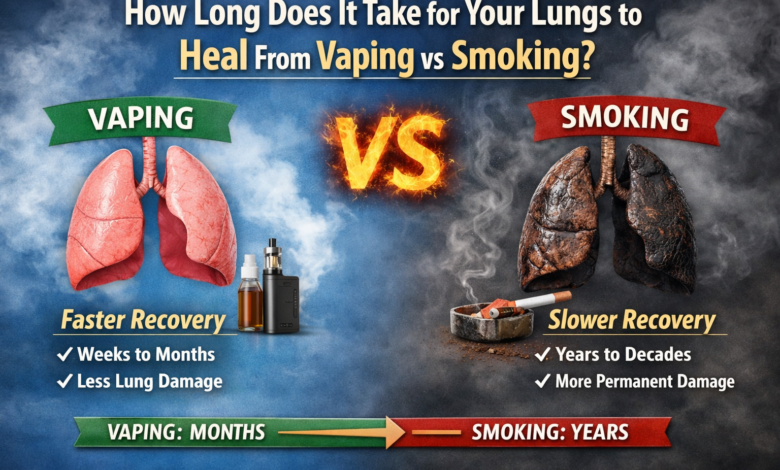
How long does it take for your lungs to heal from vaping? Inflammation may improve within weeks, while lung function can recover over months after quitting.
When asking how long does it take for your lungs to heal from vaping, the answer depends on frequency, duration, and whether vaping involved nicotine or flavored chemicals.
Short-Term Recovery (Days to Weeks)
Within the first few days of quitting vaping, airway irritation begins to subside. Many people notice reduced coughing and easier breathing. Inflammation levels drop as the lungs are no longer exposed to heated aerosols.
Medium-Term Recovery (1–3 Months)
After several weeks, lung cells regenerate and immune responses normalize. Oxygen absorption improves, mucus production decreases, and exercise tolerance increases.
Long-Term Recovery (6–12 Months)
For most former vapers without underlying lung disease, lung function may return close to baseline within a year. This is especially true for younger individuals and those who vaped for a shorter time.
How Long Does It Take for Your Lungs to Heal From Smoking?
Featured Snippet (≈155 characters):
Smoking recovery takes longer than vaping. Lung function improves over months, but full healing may take years, and some damage can be permanent.
Smoking recovery is a longer journey. While healing begins quickly after quitting, structural repair can take years.
Early Improvements (Weeks to Months)
Cilia begin regrowing within weeks, improving mucus clearance. Breathing becomes easier, and infection risk declines.
Long-Term Healing (Years)
Lung capacity and circulation continue improving for several years. However, scarred alveoli do not regenerate, meaning some smokers experience lifelong limitations.
Vaping vs Smoking: Lung Healing Timeline Comparison
| Recovery Stage | After Quitting Vaping | After Quitting Smoking |
|---|---|---|
| Inflammation reduction | Days to weeks | Weeks to months |
| Improved breathing | 1–2 months | 2–6 months |
| Lung function recovery | 3–12 months | 1–5 years |
| Permanent damage risk | Lower | Higher |
| Full recovery likelihood | High for light users | Variable |
This comparison shows why many people recover faster after vaping than smoking—but quitting early remains essential.
Factors That Affect Lung Healing Speed
Several variables influence how long does it take for your lungs to heal from vaping or smoking:
- Duration of use
- Frequency and intensity
- Age and overall health
- Presence of asthma or lung disease
- Air quality and lifestyle habits
Quitting earlier almost always leads to better outcomes.
What Happens Inside Your Lungs After You Quit
Healing isn’t just about time—it’s about biological repair.
Reduced Inflammation
Once exposure stops, inflammatory markers decrease, allowing airway tissues to recover.
Cellular Regeneration
Epithelial cells lining the airways regenerate, restoring normal barrier function.
Improved Oxygen Exchange
As swelling decreases and airways open, oxygen moves more efficiently into the bloodstream.
Can Lungs Fully Heal After Vaping?
Lungs can often heal fully after vaping, especially in short-term users. Quitting early improves the chance of full recovery within a year.
For many people, the answer is yes. Especially for those who vaped for less than a few years, lung tissue can recover almost completely.
However, heavy or long-term use may leave residual sensitivity or reduced lung capacity. This is why the question how long does it take for your lungs to heal from vaping should always include the phrase after quitting.
Signs Your Lungs Are Healing
Many people notice clear improvements as healing progresses:
- Less coughing and wheezing
- Deeper, easier breaths
- Improved stamina during exercise
- Reduced chest tightness
- Fewer respiratory infections
These signs often appear within weeks to months after quitting.
Table: Vaping vs Smoking Damage Type
| Aspect | Vaping | Smoking |
|---|---|---|
| Primary damage | Inflammation | Structural scarring |
| Toxins | Aerosols, flavor chemicals | Tar, carbon monoxide |
| Cancer risk | Still being studied | Well-established |
| Recovery potential | High | Moderate to low |
| Healing speed | Faster | Slower |
How to Support Lung Healing After Vaping or Smoking
While time is the biggest factor, certain habits can support recovery:
- Stay hydrated to thin mucus
- Engage in light aerobic exercise
- Avoid secondhand smoke or vapor
- Maintain clean indoor air
- Eat antioxidant-rich foods
These habits won’t reverse damage instantly, but they create an environment where healing happens more efficiently.
Common Myths About Lung Healing
“My lungs are permanently damaged”
Not always. Many people recover significant lung function, especially after vaping cessation.
“Vaping damage is harmless”
False. While often less severe than smoking, vaping still causes measurable lung stress.
“I’ll feel better immediately”
Healing starts quickly, but noticeable improvement may take weeks or months.
Mental and Emotional Aspects of Recovery
Breathing better often improves mood, sleep quality, and anxiety levels. Feeling short of breath can increase stress, so lung healing often brings psychological relief as well.
Why Quitting Early Matters Most
The most important takeaway when asking how long does it take for your lungs to heal from vaping is that healing potential decreases the longer exposure continues. Early cessation dramatically improves recovery outcomes.
Conclusion: Vaping vs Smoking Lung Recovery
So, how long does it take for your lungs to heal from vaping vs smoking? For most people, vaping recovery happens in months, while smoking recovery may take years. Neither habit is harmless, but both show that the lungs have an incredible ability to repair when given the chance.
Read More:- How Long Does It Take for a Tattoo to Heal Fully? Expert Aftercare Advice