The Hidden Dangers in Textured Ceilings
Many older homes feature popcorn ceilings, a popular decorative choice for decades. While they might seem harmless, these textured surfaces can hide a significant health hazard: asbestos. This material was widely used in construction for its fire-resistant properties and affordability. However, its microscopic fibers, when released into the air, pose serious health risks. It’s estimated that asbestos was used in popcorn ceiling applications until the late 1970s. If your home was built before this period, there’s a strong possibility your ceiling contains asbestos.
Why Asbestos Was Used in Popcorn Ceilings
From the 1950s through the 1970s, asbestos was a go-to additive for popcorn ceiling materials. Manufacturers mixed it into the ceiling texture compounds for several reasons:
- Fire Retardancy: Asbestos fibers are naturally resistant to heat and fire, making them an attractive component for building materials.
- Insulation Properties: The material offered some degree of sound and thermal insulation.
- Cost-Effectiveness: Asbestos was an inexpensive filler that could bulk up products and improve their texture.
- Ease of Application: Its texture made it easy to spray or apply, contributing to its widespread popularity.
Health Implications of Asbestos Exposure
The danger of asbestos lies in its fibrous nature. When disturbed, these fibers can become airborne and easily inhaled. Once inside the lungs, they can cause significant damage over time. The health effects are not immediate; they often take many years, even decades, to manifest. Exposure to asbestos is linked to several severe respiratory diseases, including asbestosis, lung cancer, and mesothelioma. For those diagnosed with mesothelioma due to asbestos exposure, there may be options for seeking compensation [1ae7]. Understanding these risks is the first step in managing potential hazards in your home.
Identifying Asbestos Popcorn Ceiling Materials
The Hidden Dangers in Textured Ceilings
Popcorn ceilings, also known as acoustic ceilings, were a popular choice for homeowners for decades. Their textured surface was effective at hiding imperfections and reducing sound. However, the very material that made them appealing also posed a significant risk. Many popcorn ceiling materials installed before the mid-1980s contained asbestos, a mineral fiber that was widely used for its insulating and fire-resistant properties. The danger lies in the fact that these asbestos-containing materials (ACMs) are often friable, meaning they can be easily crumbled or reduced to powder, releasing microscopic asbestos fibers into the air. When disturbed, these fibers become airborne and can be inhaled, leading to serious health issues over time.
Why Asbestos Was Used in Popcorn Ceilings
Asbestos was a miracle material for a long time. Its natural properties made it ideal for use in construction materials like popcorn ceilings. It was inexpensive, readily available, and offered excellent fireproofing and sound-dampening qualities. Manufacturers mixed asbestos fibers into the ceiling texture compounds to achieve a durable, aesthetically pleasing, and functional finish. The fibers helped bind the material together and provided the characteristic bumpy texture. Because asbestos was so common and considered safe at the time, it was incorporated into countless building products without much thought to its long-term health effects.
Health Implications of Asbestos Exposure
Inhaling asbestos fibers can have severe and long-lasting consequences for your health. Once airborne, these tiny fibers can lodge themselves deep within the lungs. Over many years, this can lead to a range of debilitating and often fatal diseases. The most well-known asbestos-related illnesses include:
- Asbestosis: A chronic lung disease characterized by scarring of lung tissue, which makes breathing difficult.
- Mesothelioma: A rare but aggressive cancer that affects the lining of the lungs, abdomen, or heart.
- Lung Cancer: Exposure to asbestos significantly increases the risk of developing lung cancer, even in individuals who have never smoked.
It is important to remember that the health effects of asbestos exposure may not appear for decades after the initial exposure, making early identification and management critical.
The Perils of DIY Popcorn Ceiling Removal
Disturbing Asbestos Fibers During Scraping
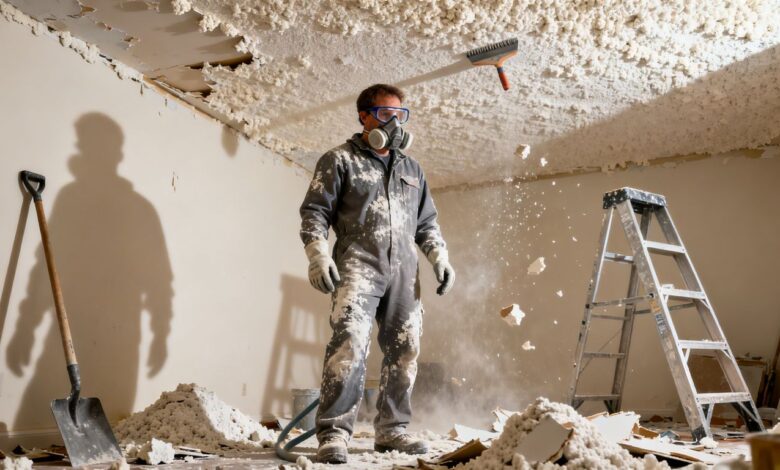
Attempting to remove popcorn ceilings yourself, especially without proper knowledge or precautions, can be a risky endeavor. The primary concern lies in the potential presence of asbestos within the textured material. When asbestos-containing popcorn ceilings are scraped or disturbed, microscopic asbestos fibers can become airborne. These fibers are incredibly lightweight and can remain suspended in the air for extended periods. Inhaling these fibers is the main route of exposure and poses significant health risks. Without specialized equipment and containment procedures, a DIY removal project can inadvertently turn your home into a contaminated environment.
Inadequate Containment and Ventilation
One of the biggest pitfalls of DIY asbestos ceiling removal is the failure to establish adequate containment and ventilation. Professionals use specialized plastic sheeting, negative air pressure machines, and sealed work areas to prevent asbestos fibers from spreading to other parts of the house. Homeowners attempting removal often lack this equipment, leading to:
- Uncontained Dust Spread: Dry scraping can create a fine dust that easily travels through HVAC systems and open doorways.
- Insufficient Ventilation: Opening windows might seem like a good idea, but without proper filtration, it can simply spread contaminated air outdoors or to adjacent areas.
- Cross-Contamination: Tools, clothing, and even people can track asbestos fibers throughout the home, contaminating surfaces and posing a risk to occupants.
The Risk of Airborne Asbestos Contamination
The act of scraping itself is what liberates the asbestos fibers. Unlike solid materials, asbestos is made of thin, fibrous crystals. When the popcorn texture is broken apart by scraping, these fibers detach. If the material contains asbestos, even a small amount, disturbing it can release a significant number of these microscopic particles into the air. These particles are too small to be seen with the naked eye, making it difficult to gauge the extent of contamination. Once airborne, these fibers can be inhaled, leading to serious long-term health issues. The risk is amplified because the ceiling material is often dry and brittle, making it prone to crumbling and releasing fibers with minimal disturbance.
Health Consequences of Asbestos Exposure
Asbestosis and Lung Scarring
Exposure to asbestos fibers can lead to a serious lung condition known as asbestosis. When these tiny fibers are inhaled, they can become lodged in the lung tissue. Over time, this can cause inflammation and scarring, making it increasingly difficult for the lungs to function properly. This scarring, or fibrosis, is permanent and can lead to a persistent cough, shortness of breath, and chest pain. The progression of asbestosis can vary, but it is a debilitating disease that significantly impacts a person’s quality of life.
Mesothelioma: A Rare but Aggressive Cancer
One of the most severe health risks associated with asbestos exposure is mesothelioma. This is a rare and aggressive cancer that affects the lining of the lungs (pleura), abdomen (peritoneum), or heart (pericardium). The latency period for mesothelioma can be very long, often appearing 20 to 50 years after initial exposure. Unfortunately, mesothelioma has a poor prognosis, and treatment options are often limited. The link between asbestos exposure and mesothelioma is well-established by scientific research.
Increased Risk of Lung Cancer
Beyond asbestosis and mesothelioma, asbestos exposure also significantly increases the risk of developing lung cancer. This risk is particularly elevated for individuals who smoke. When asbestos fibers are inhaled, they can damage the cells in the lungs, leading to cancerous mutations. The combination of smoking and asbestos exposure creates a synergistic effect, dramatically multiplying the likelihood of developing lung cancer compared to individuals exposed to only one of these risk factors. Regular medical check-ups are advised for anyone with a history of asbestos exposure, especially if they have also smoked.
Safe Practices for Asbestos Popcorn Ceiling Management
When to Leave Asbestos Popcorn Ceilings Alone
Sometimes, the safest approach is to do nothing at all. If your popcorn ceiling material has been tested and confirmed to contain asbestos, and if it’s in good condition – meaning it’s not crumbling, flaking, or damaged in any way – the best course of action is often to leave it undisturbed. Asbestos fibers are only dangerous when they become airborne and are inhaled. A intact, undisturbed asbestos-containing popcorn ceiling poses minimal risk. Trying to remove it yourself can create the very hazard you’re trying to avoid. Covering the ceiling with a new layer of drywall or another type of ceiling material is a common and effective way to encapsulate the asbestos, preventing any potential fiber release.
Professional Abatement vs. DIY
When dealing with asbestos, the question of DIY versus professional help is paramount. While the idea of saving money by tackling the job yourself might be tempting, the risks associated with asbestos removal are significant. Professionals have the training, specialized equipment, and knowledge to safely contain and remove asbestos-containing materials. This includes using personal protective equipment (PPE), setting up containment barriers, employing wet methods to minimize dust, and using HEPA vacuums for cleanup. DIY removal, on the other hand, often lacks these precautions, leading to a high risk of contaminating your home with airborne asbestos fibers. This contamination can have serious long-term health consequences for everyone living in the house. For peace of mind and safety, professional abatement is strongly recommended.
Proper Cleanup Procedures if Disturbed
If you suspect your popcorn ceiling has been disturbed and asbestos fibers may have been released, immediate and proper cleanup is vital. This is not a job for a regular vacuum cleaner or a dry cloth. The recommended procedure involves:
- Wet Wiping: Use damp cloths or rags to wipe down all affected surfaces. This helps to trap any settled asbestos fibers. Dispose of these cloths immediately in a sealed plastic bag.
- HEPA Vacuuming: Use a vacuum cleaner equipped with a High-Efficiency Particulate Air (HEPA) filter. These vacuums are specifically designed to capture microscopic particles, including asbestos fibers, without releasing them back into the air.
- Sealing and Disposal: All debris, cleaning materials, and contaminated items should be placed in heavy-duty plastic bags, sealed tightly, and labeled as asbestos waste. Check with your local authorities for specific disposal guidelines, as asbestos waste often requires special handling.
- Ventilation: After cleaning, ventilate the area thoroughly by opening windows and doors, but only after the initial wet cleaning and HEPA vacuuming are complete to avoid spreading dust.
Long-Term Health Monitoring After Exposure
If someone has accidentally scraped a popcorn ceiling and later found out it might have contained asbestos, health monitoring becomes a big deal. This isn’t a one-and-done kind of exposure—issues might not show up for decades. Ongoing attention is the best approach here, even if things seem fine for now.
The Latency Period of Asbestos-Related Diseases
Most health issues linked to asbestos don’t appear right away. There can be a long gap—sometimes 20 years or more—between exposure and actual symptoms. That’s why it’s easy to feel like nothing’s wrong after a bit of DIY ceiling work, even when something serious could be developing behind the scenes. Early warning signs are rare, so regular check-ins are important.
Importance of Regular Medical Check-ups
Staying on top of routine check-ups is smart, especially if you’ve been around asbestos dust. Let your doctor know about any exposure—don’t just keep it to yourself. Here’s what these check-ups might involve:
- A detailed record of any exposures, even if they seemed minor at the time
- Chest X-rays, sometimes repeated over several years
- Lung function tests to spot changes in breathing early
Doctors might not find much at first, but these exams help document and track any subtle changes over time.
Consulting with Healthcare Professionals
If you’re nervous about past ceiling projects, reach out to a doctor with experience in asbestos—sometimes called a pulmonologist. They can:
- Listen to your complete history, including dates and how the job was done
- Suggest the best screenings based on your risks
- Give advice about symptoms to watch for, like chronic cough or shortness of breath
And keep in mind, even handling wet popcorn ceilings can release fibers, not just dry dust (airborne exposure warning).
Taking these steps means you’re not just waiting and hoping. Instead, you’re keeping a close eye on your health, which is key if you’ve had any kind of asbestos scare.
Helpful Resources